The telecommunications landscape in Lithuania has seen significant evolution, with companies like UAB GSM LINIJA playing a role in its development. This company, with a history rooted in IT and telecommunications projects, has also ventured into the retail of mobile devices, adapting to market demands and technological advancements. While its operational status has changed, understanding its past activities, partnerships, and market positioning offers insights into the broader trends of the Lithuanian telecommunications and retail sectors.
A Foundation in Telecommunications Projects
UAB GSM LINIJA's journey began with a focus on telecommunications projects. For over 20 years, the company has successfully operated within the information technology and telecommunications sector. Its expertise was further solidified by its representation of key industry players in Lithuania. These included established companies such as MITEL (encompassing Aastra, EADS Telecom, and Matra Nortel), UNIFY (formerly Siemens), PLANTRONICS, PLATAN, FUNKWERK, 2N, ALPHATEC, and LINKCOM. This extensive network of partnerships suggests a deep understanding of various telecommunication systems and solutions, likely catering to business clients and infrastructure development.
The company's engagement in "telekomunikaciniai projektai" (telecommunication projects) implies involvement in the planning, implementation, and maintenance of communication networks, potentially for enterprises or public institutions. This area requires specialized knowledge in areas like network architecture, hardware integration, and software solutions.
Evolution into Mobile Retail
Beyond its project-based work, UAB GSM LINIJA also established a presence in the retail sector, specifically in the sale of mobile phones and related devices. The company's online presence, GSMarena.lt, aimed to provide customers with a comprehensive shopping experience. Operating in the market for a decade, GSMarena.lt positioned itself as a leading retailer of both new and used mobile phones.
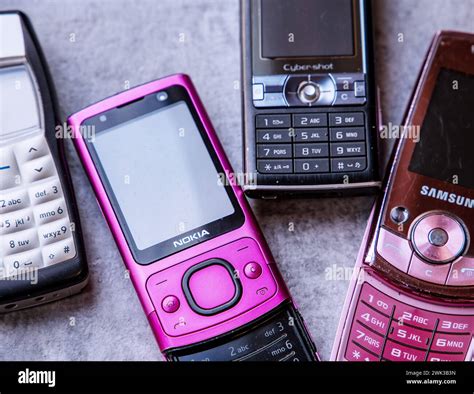
The product catalog offered by GSMarena.lt covered a wide spectrum, from "nesenstančią klasiką" (timeless classics) to "naujausias inovacijas" (latest innovations). This indicates a strategy to cater to diverse customer needs and preferences, appealing to both those seeking budget-friendly options and early adopters of cutting-edge technology. The inclusion of popular brands such as "Apple," "Samsung," "Google," "Xiaomi," and "OnePlus," along with "daugelį kitų prekinių ženklų" (many other brands), highlights a commitment to offering a broad selection and meeting market demand for leading manufacturers.
The emphasis on offering a "geriausią apsipirkimo patirtį" (best shopping experience) suggests a customer-centric approach, likely involving competitive pricing, efficient service, and a user-friendly online platform. The mention of "mažmeninės prekybos įmonė" (retail company) further clarifies its operational model in this segment.
Market Presence and Partnerships in Connectivity
UAB GSM LINIJA's retail operations were also associated with partnerships that enhanced its service offerings. The company's outreach included promoting the "greičiausią BITĖS 5G ryšį" (fastest BITĖ 5G connection). This collaboration with BITĖ, a major telecommunications operator in Lithuania, underscored a focus on providing access to advanced mobile network technology. The statement that "jau gali naudotis beveik 2 mln. Lietuvos gyventojų" (almost 2 million Lithuanian residents can already use it) highlights the widespread availability and adoption of BITĖ's 5G network during the period of UAB GSM LINIJA's active operations.
The description of BITĖ's 5G connection as "ypač stabilus" (especially stable) and "patogu naudotis tiek namuose, tiek išmaniuosiuose įrenginiuose" (convenient to use both at home and on smart devices) emphasizes the benefits for end-users, suggesting that UAB GSM LINIJA aimed to connect its customers with reliable and high-performance mobile internet.
The benefits of 5G technology for businesses and individuals
Company Details and Operational Status
Company ID: 302512575VAT code: LT100006626613Incorporation date: 19/05/2010Dissolved from: 07/05/2020
The company's registration details indicate its establishment in 2010 and its dissolution in May 2020. This timeline places its active operational period within a dynamic phase of technological change, particularly in the mobile industry. The initial focus on telecommunication projects and later expansion into mobile retail suggest a strategic adaptation to market opportunities.
Financial and Risk Assessment Data
Information from platforms like Okredo provides a glimpse into the company's financial standing and risk profile during its operational years. While specific financial figures might be dated, the types of data available offer insights into how such companies are assessed.
Pre-Score and GOscore: These are statistical predictive models developed by SCORIFY to assess the probability of a company's bankruptcy or default. The Pre-Score is based on open data, while the GOscore considers all available data for a more comprehensive rating. These metrics are crucial for creditors and business partners to gauge financial reliability.
Company's Value: Calculated using the Excess Return Model, this metric measures a business's ability to generate added profit. It considers profitability and growth ratios, aiding in business valuation, comparison with competitors, and negotiation during transactions.
Credit Limit: This is determined by SCORIFY based on financial statements and their credit risk assessment model. Key financial ratios like tangible assets, working capital, sales, efficiency, profitability, and liquidity are used to calculate it. A credit limit helps assess borrowing capacity and the financial capabilities of business partners.
Financial Ratios: While detailed current financial data for UAB GSM LINIJA might not be readily available due to its dissolution, typical financial indicators assessed include:
- EBITDA (Earnings Before Interest, Taxes, Depreciation, and Amortization): A measure of operating performance and a proxy for cash flow.
- EBITDA margin: Evaluates operating profitability relative to revenue.
- EBIT (Earnings Before Interest and Taxes) margin: Shows profitability from core operations before capital structure and tax impacts.
- Turnover: Total revenue generated from sales.
- Sales per employee: An efficiency indicator measuring company performance relative to its workforce.
- Profit before tax and Net Profit: Key profitability metrics.
- Profit per employee: A growth indicator reflecting profit earned per employee.
- Total profitability and Net profitability: Overall measures of financial success.
- Debt-to-equity ratio: Reflects the company's financing structure.
Debts and Credit History: Data on unpaid debts, including the number, largest debt amount, and oldest open debt, are critical for assessing a company's financial health and payment history. Information on tax debts (SODRA, STI) and court cases (as defendant or plaintiff) also contributes to the overall risk assessment.
Eco Score (Green Index): This metric, developed by Okredo, estimates the carbon footprint of a company's vehicle fleet. It categorizes companies based on CO2 emissions per vehicle, promoting environmental awareness in business operations. For UAB GSM LINIJA, the data indicated "Įmonės vardu transporto priemonės neregistruotos" (no vehicles registered in the company's name), meaning its eco score related to fleet emissions was not applicable or determined.
Regulatory and Public Information
Licenses and Public Procurement: Companies typically operate under various licenses and permits. The information for UAB GSM LINIJA stated that "The company has no records of any licenses, permits, certificates, or other licensing documents issued." Similarly, data on public procurement, including won tenders and announced tenders, was not available, suggesting no significant participation in public contracts.
Trademarks: The company had no registered trademarks, indicating it did not actively protect specific brand names or logos associated with its retail or project operations.
Public Negative Information: The absence of "public negative information" suggests that the company did not have significant adverse public records or reports during its active period.
Addresses and Historical Data
Throughout its operational history, UAB GSM LINIJA was associated with several addresses in Vilnius, reflecting potential changes in its administrative or operational bases. These include:
- Ateities pl.
- Žemaitės g.
- Saltoniškių g.
- Pranciškaus Smuglevičiaus g.
- Gedimino pr. 45-4 (also noted as its registered address at one point, though the company was later deregistered).
The provided information indicates that UAB GSM LINIJA (registered address Vilnius, Gedimino pr. 45-4) was deregistered on June 1, 2021. Prior address changes were also noted, such as from Vilnius, Gedimino pr. 45-4 to Vilnius, Gedimino pr., and from Vilnius, Vytauto g. 28-15 to Vilnius, Gedimino pr., and from Vilnius, Fabijoniškių g. 43-66 to Vilnius, Vytauto g. These changes, along with the final deregistration, mark the cessation of its formal business operations.
Similar Companies and Market Context
The analysis of "Similar Companies" would typically involve identifying other businesses operating in the same sectors, such as IT, telecommunications, and mobile device retail in Lithuania. Comparing UAB GSM LINIJA with its peers would offer insights into market share, competitive strategies, and common challenges faced by similar enterprises. However, the provided data indicated "0 Similar companies," which might be a limitation of the specific data source or reflect a niche market position.
Legacy and Market Impact
While UAB GSM LINIJA is no longer an active entity, its history reflects the dynamic nature of the telecommunications and retail sectors in Lithuania. Its dual focus on complex telecommunication projects and consumer-oriented mobile retail demonstrates a capacity for strategic diversification. The company's partnerships with major technology providers and telecommunication operators like BITĖ underscore its integration into the national technological infrastructure. The information available, particularly from financial assessment platforms, highlights the rigorous scrutiny and data-driven evaluation that businesses undergo, regardless of their operational status. The evolution from a project-focused entity to a retail presence, and ultimately its deregistration, serves as a case study in the lifecycle of businesses within rapidly changing technological markets.